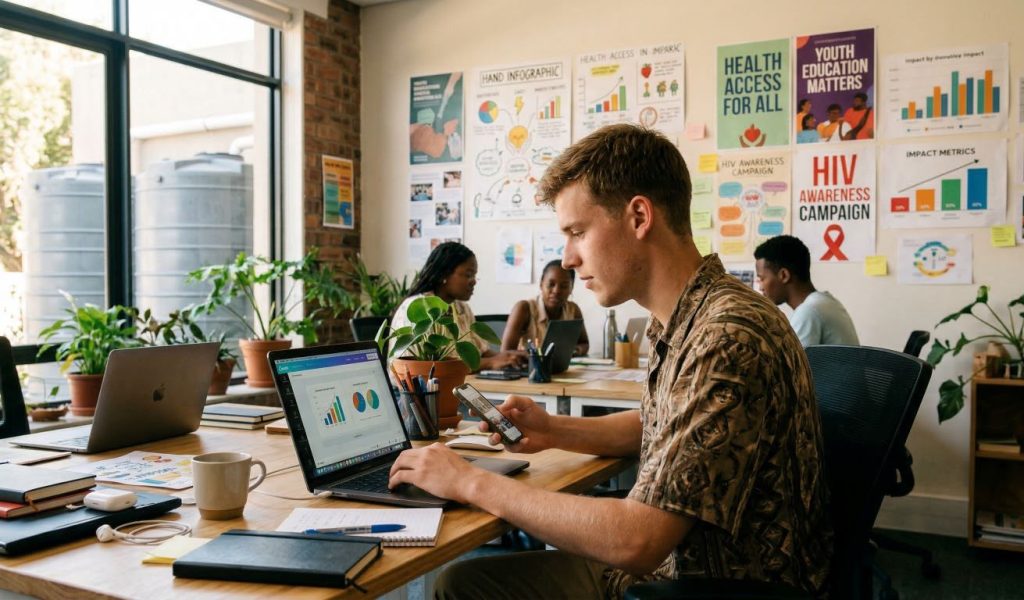
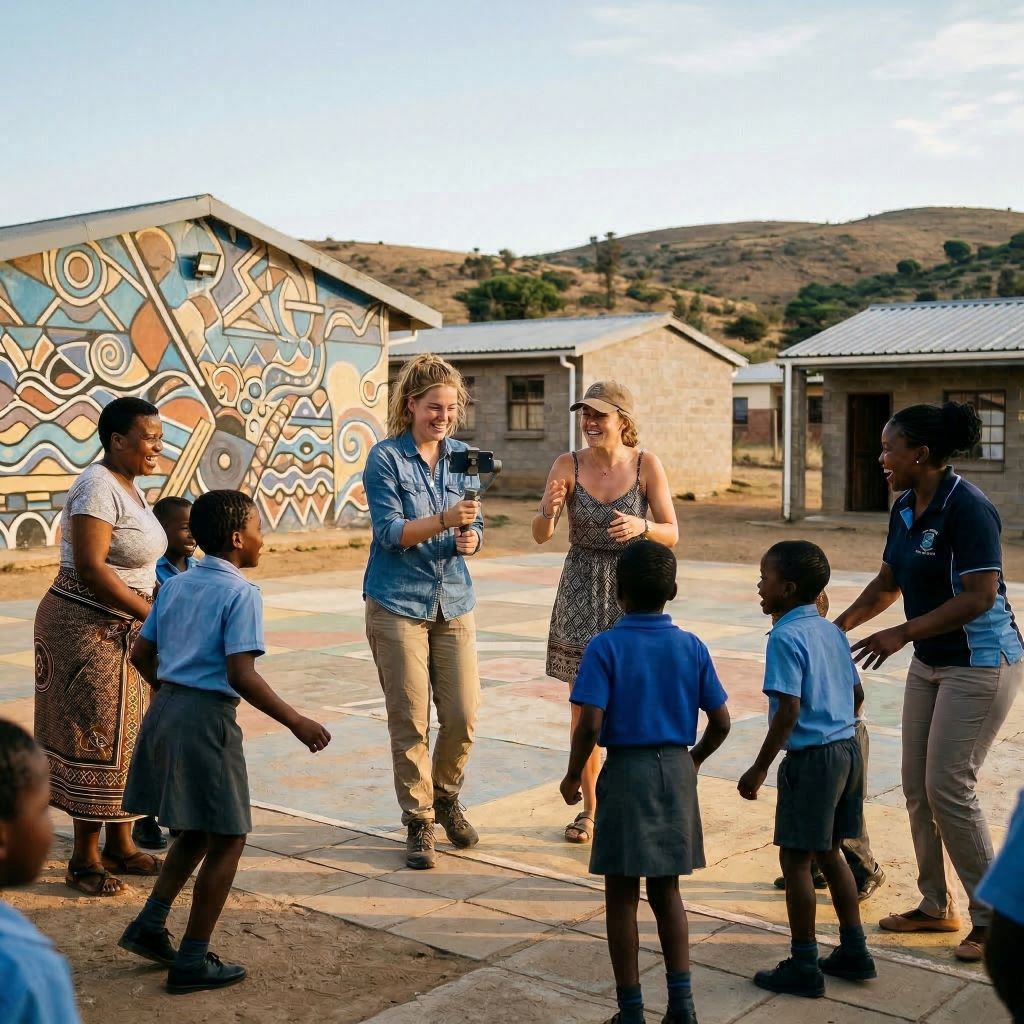
You bring the skills to capture attention. But can you hold it long enough to build trust? To shift perspectives? To change behavior? In South Africa’s townships, you’ll find stories that don’t need dressing up—just someone who knows how to see them, shape them, and share them. As a media or communications intern, you might:
Here, content has consequences. And that’s exactly the point.
We won’t sugarcoat it—this environment can be challenging.
But time and again, we’ve seen interns make a real difference. You’ll sit in moments with no easy fixes, listen to stories that aren’t in any textbook, and learn to see strength where others only see need.
Knowing Dutch or Flemish can open unexpected doors in South Africa, Belgium, and beyond. In South Africa, Afrikaans evolved from Dutch, and while they’re not identical, Dutch speakers often find they can understand much of the language — especially in written form. While this does not solve all language barrier challenges, it can create unique openings in community work, local colleagues, or social development contexts where Afrikaans is spoken; it can be a bridge to trust, nuance, and deeper collaboration. Interdisciplinary insights that matter here:
Who owns a story? Who gets to tell it? You’ll be working with people, not just content. Bring your questions, your self-awareness, and your respect for complexity.
If you have an eye for framing, colour, layout, or flow, your social media work will land harder and linger longer. Sometimes, it starts with a good hunch about what looks and feels true.
You understand the difference between clicks and connection. Between visibility and value. Knowing how to set a goal, measure engagement, and pivot when needed makes your work more than creative — it makes it effective.
You don’t have to speak every language — but you’ll need to read a room, tune into context, and collaborate across perspectives. If you know how to listen between the lines, you’ll go far.
You might be helping a community tell its story for the first time. Or supporting an NGO to reach donors, volunteers, or the people who need their services most. Or giving a team the extra hands it needs to make its message heard. Either way, the impact is real — and mutual.