Welcome to a space where your skills are tested in ways that go far beyond the lab or classroom—where tech meets community, creativity, and systems thinking.
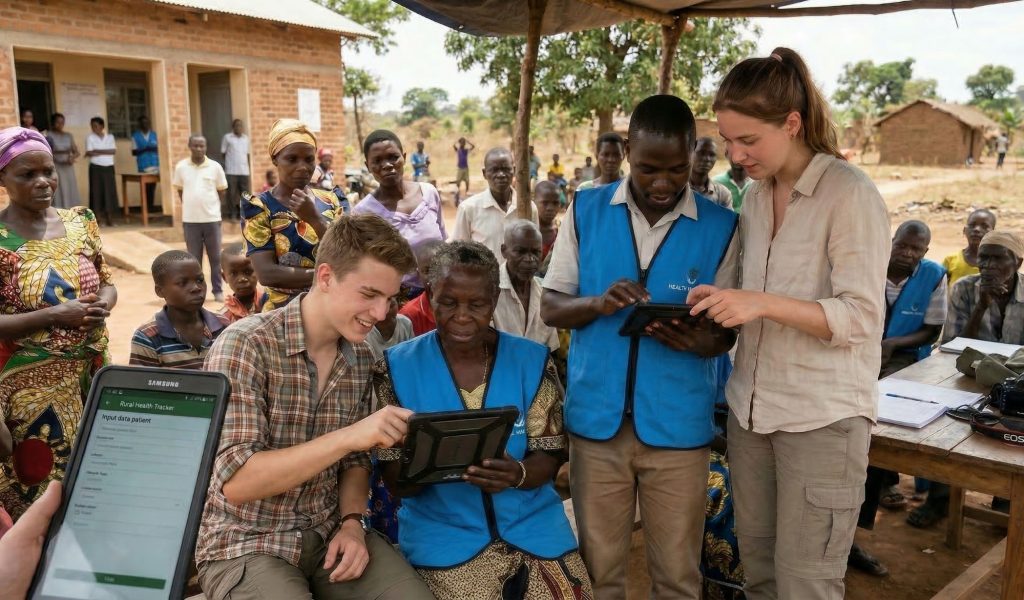
You might help a rural school design a secure system for tracking student progress despite intermittent internet access. Or build a lightweight mobile app that lets health workers in remote areas collect and share data offline. You could prototype dashboards that help small-scale farmers make better decisions using weather and soil data, or assist a grassroots organisation in migrating from paper to digital workflows that save time and money.
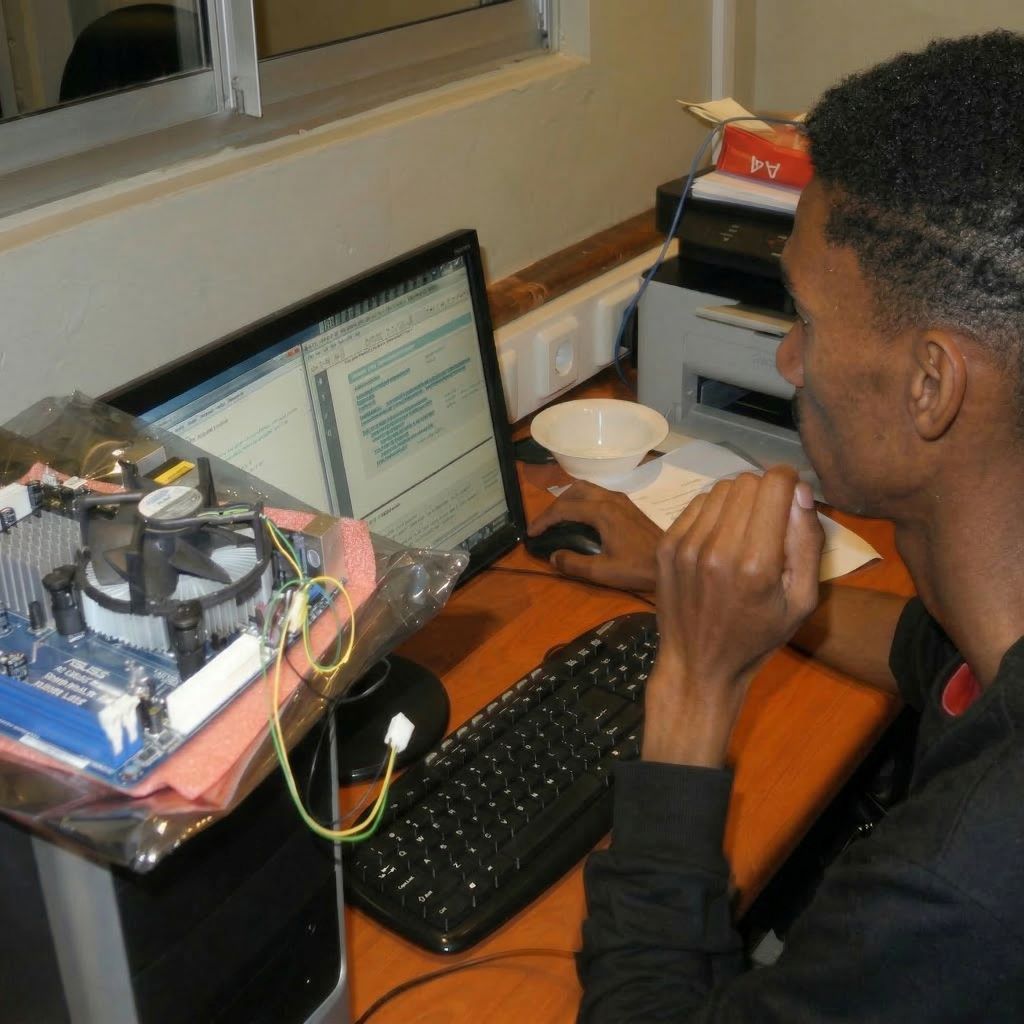
You could help a township school set up a computer lab, including networking and computer repairs.
You could also assist in preparing donated Google Chromebooks to help students study and prepare for their exams.
This isn’t charity. It’s development. It’s problem-solving with context, empathy, and impact in mind. Your work contributes to local resilience, institutional learning, and inclusive innovation.
Here, you’re not just refining technical skills. You’re learning to design for constraints, collaborate across disciplines, and ask better questions. You’re practising the kind of leadership that starts with listening. And you’re discovering that the real value of your code lies in what it makes possible for others.
We won’t sugarcoat it—this environment can be challenging.
But time and again, we’ve seen interns make a real difference. You’ll sit in moments with no easy fixes, listen to stories that aren’t in any textbook, and learn to see strength where others only see need.
While English is the language of instruction, data is the language of scale. And code is the language of systems. Whether you’re fluent in front-end, back-end, or somewhere in between, your skills give you a head start in turning good intentions into real-world solutions.
And don’t underestimate your “non-technical” skills. Tech isn’t just code — it’s creativity, clarity, and community.
Here’s where you’ll shine beyond the keyboard:
is using open-source tools like Google My Maps or StoryMapJS to help students map their communities, tell local stories, or visualise issues like access to water, clinics, or transport.
to teach basic electronics, diagnostics, and safe repairs using old phones, computers, or microcontrollers. It’s hands-on problem solving — and a way to build agency with limited resources.
by using it to understand and advocate around what affects communities — from tracking water quality or local clinic visits, to mapping illegal dumping sites or visualising load-shedding patterns.
because though people assume AI = cloud, an expert can teach about local inference, edge computing, or how to run lightweight models offline — which is huge for places with poor connectivity or data costs.
You might be helping a teacher automate classroom tasks for the first time. Or supporting a community organisation to collect and use data more effectively. Or giving students access to digital tools they’ve never had before. Either way, the impact is real—and mutual.