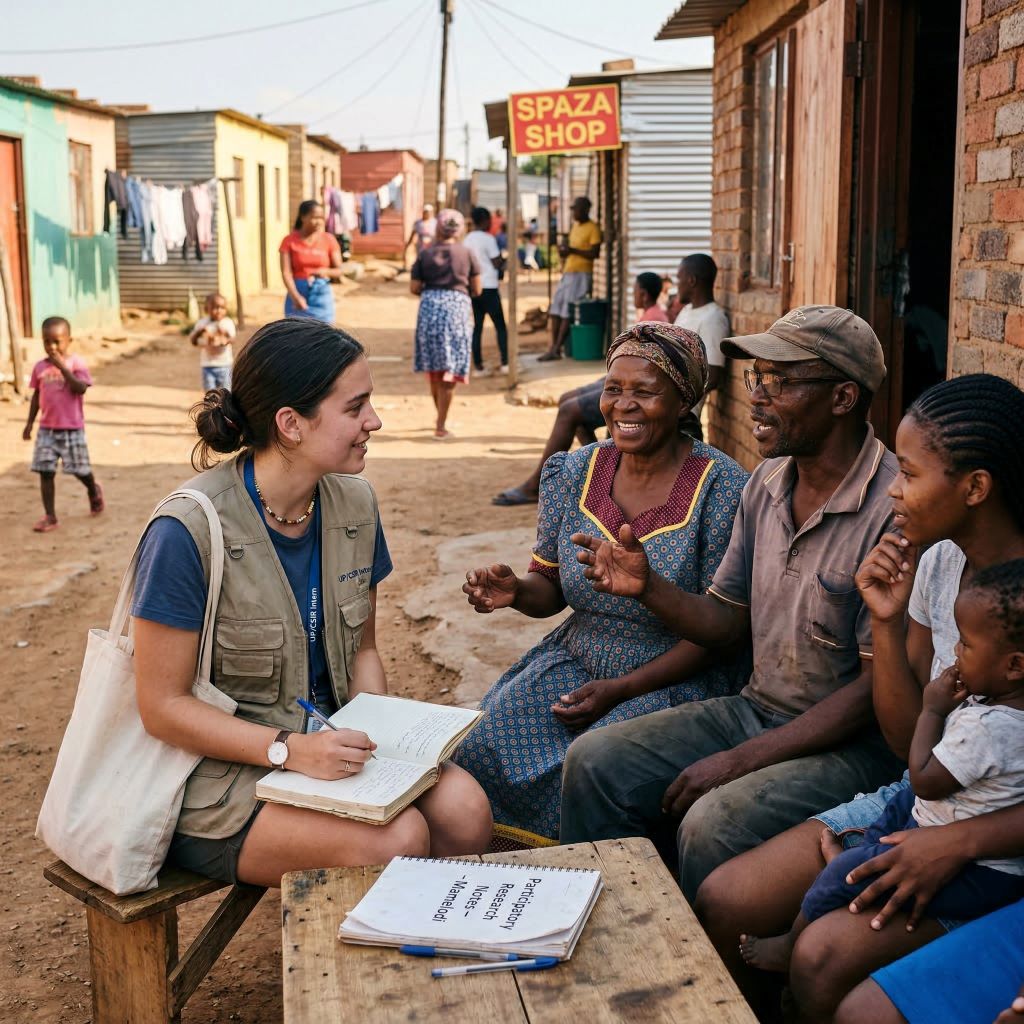
In the communities where Ready4Life works, you’ll find people doing extraordinary things with very limited resources—often in ways that never make it into policy papers or academic journals. You’ll also meet people with deep knowledge of their community’s needs, but who may not have the language, tools, or networks to attract broader support.
That’s where you come in. Your research will fill in the gaps, substantiate or challenge assumptions, and uncover blind spots that others might miss.
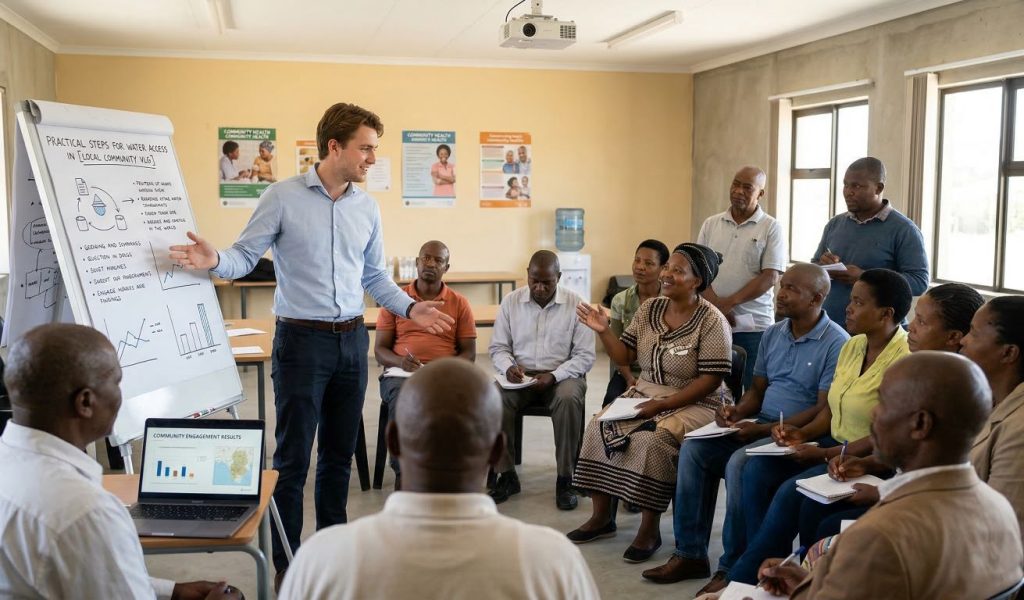
This is research with purpose. It’s grounded in real needs, shaped by real voices, and directed toward tangible outcomes. Whether you’re helping assess a community health program, documenting educational barriers, mapping food systems, or evaluating the impact of social interventions, your work won’t sit on a shelf—it will inform decisions, support communities, and spark meaningful change.
Although research placements are limited, Ready4Life is often asked by universities to serve as their implementation partner. Depending on your research topic, your project can be aligned with a university’s request. Most of these research opportunities are in the fields of social science, policy, and community development.
We won’t sugarcoat it—this environment can be challenging.
But time and again, we’ve seen interns make a real difference. You’ll sit in moments with no easy fixes, listen to stories that aren’t in any textbook, and learn to see strength where others only see need.
Knowing Dutch or Flemish can open unexpected doors in South Africa, Belgium, and beyond. In South Africa, Afrikaans evolved from Dutch, and while they’re not identical, Dutch speakers often find they can understand much of the language — especially in written form. While this does not solve all language barrier challenges, it can create unique openings in community work, local colleagues, or social development contexts where Afrikaans is spoken; it can be a bridge to trust, nuance, and deeper collaboration. Interdisciplinary insights that matter here:
Not everything worth studying is quantifiable — learn to explore the "why" as well as the "what"; to listen before you analyse, and to analyse before you interpret.
It’s not just about data collection — it’s about making that data make sense and move people. This may mean translating knowledge for different stakeholders.
See how education, health, housing, gender, and climate all intersect in people’s lives — and reflect that in your research approach.
Good research doesn’t just generate insight. It builds trust and leaves people better off than when you arrived.
This is for students who don’t just want to write a thesis — they want their work to matter.